The Iron Whisper Ward — Irish Protection Charm
- Sorcha Lunaris

- Nov 22, 2025
- 5 min read
Updated: Nov 28, 2025
“Where iron rests, no shadow lingers.”
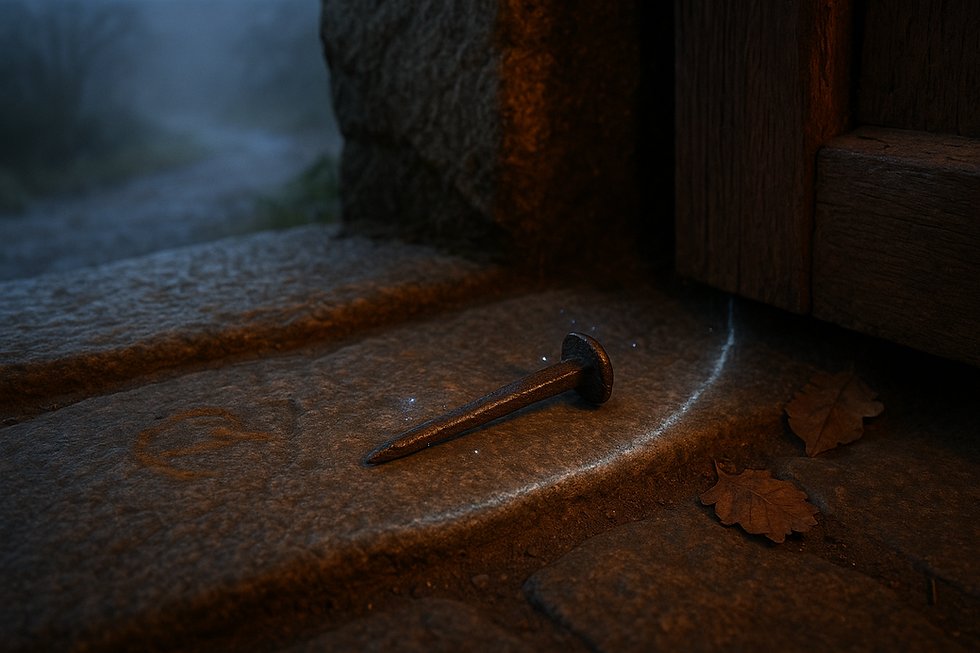
In the deeper folds of Irish folk tradition, there is one material whose reputation endures beyond all seasons and all stories: iron. Hard, cold, and forged in fire, iron held a quiet authority long before Christianity, long before written lore, long before the saints and scholars shaped the land with ink. It was one of the oldest guardians of the Irish home — a silent protector against what was feared, what wandered, and what watched unseen. The people did not revere iron as a relic or as divine metal. They trusted it because it worked.
Across Ireland — from the limestone plains of Clare to the heather-wrapped hills of Donegal — the belief held firm that iron was the one substance the Otherworld disliked, even avoided. While silver charmed and gold inspired, it was iron that held the boundary. It was said to unsettle harmful spirits, break glamour, quiet mischief, and stop the creeping influence of ill-will. It was the metal of the earth’s bones and the blacksmith’s breath, and it bore inside it a quality of resolute refusal that few other substances could match.
Though many know of the horseshoe above the doorway, the smith’s nail at the hearth, or the iron poker left by the fireside, there existed another, lesser-known practice used by hearth witches and wise women throughout the darker months of the year — a practice so gentle, so quiet, that it rarely appears in written folklore. It was not the iron that was powerful in this charm. It was the whisper.
This rite, known in fragments of oral tradition as the Iron Whisper Ward, was never meant to be dramatic. It was not the magic of confrontation or force. Instead, it was a ward woven through calm intention — a charm activated through breath, tone, and quiet certainty. The whisper was spoken soft enough that no wandering spirit or passing ear might hear it, yet clear enough that the iron understood its task.
Want to read more?
Subscribe to theancientirishcraft.com to keep reading this exclusive post.