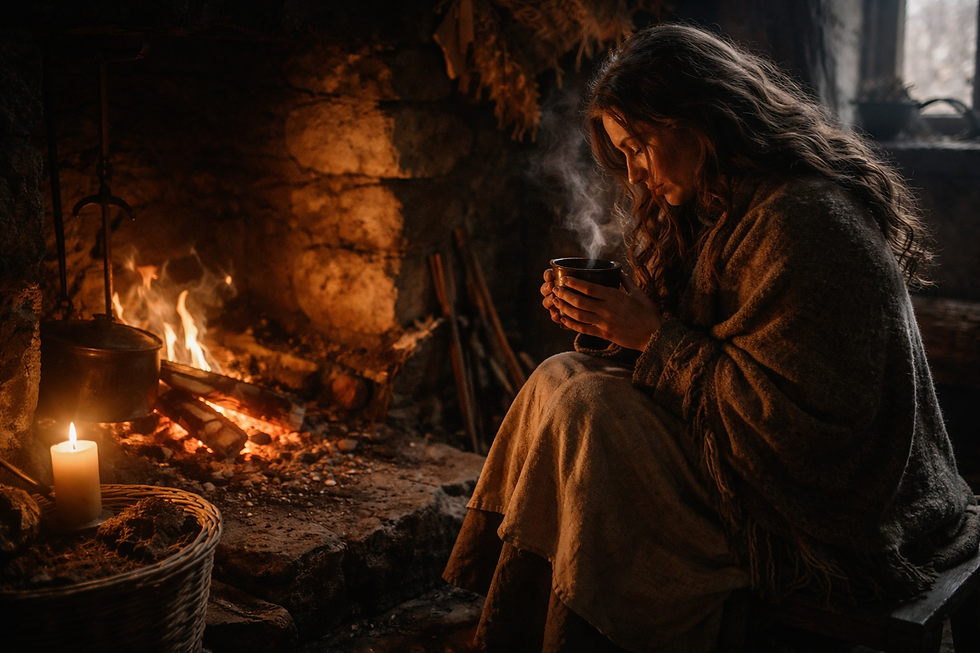
Reawakening Old Charms – The Ancient Irish Art of Stirring Sleeping Spells
- Sorcha Lunaris

- Nov 10, 2025
- 5 min read
Updated: Nov 27, 2025
“Magic does not die; it merely sleeps until called.”

In the quiet lore of the Irish witches, there is an old belief that a spell, once woven with true intent, never truly fades.
It may grow still, its light dimming with the turning of seasons, yet within it remains a spark — waiting to be stirred again by the witch who first breathed it into being.
This practice, known among the hearthwise as Charm Reawakening, is one of the gentlest yet most potent acts of reawakening old charms.
It teaches that magic is not abandoned — it rests, dreaming in the fabric of what we have made.
The Sleeping Charm
To the ancient witch, every charm was a living thing — part breath, part prayer, part spirit.
When a sachet, talisman, or bundle ceased to stir with power, it was not deemed “spent.”
Rather, it was asleep, awaiting remembrance.
A charm’s slumber was natural — like the hibernation of seeds in frost or the stillness of the hearth between embers.
Its purpose remained intact, but its energy grew quiet until rekindled by the same hands that shaped it.
Old Irish wisdom taught that “what is made by will remembers its maker.”
So long as the witch who wove the spell lived and carried her craft within, the charm remained bound to her — by thread, by breath, and by memory.
The Act of Reawakening
Want to read more?
Subscribe to theancientirishcraft.com to keep reading this exclusive post.