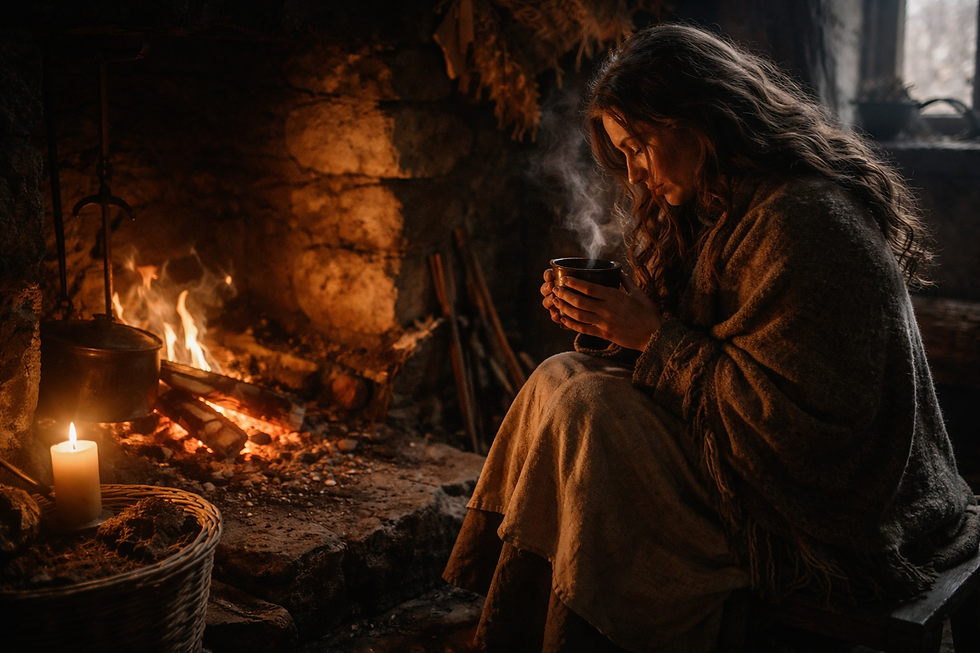
The Guarding of the New Flame: An Irish Winter Practice After Solstice
- Sorcha Lunaris

- Dec 24, 2025
- 4 min read
“The light has returned — now it must be protected.”

In Irish Craft understanding, the last week of December does not belong to celebration, declaration, or outward movement. The Winter Solstice has passed, yet the land remains hushed, cautious, and restrained. The returning light is present, but it is young — newly born, easily unsettled, and not yet ready to be exposed to noise or demand. This is why, in older seasonal wisdom, the days after Solstice were governed not by growth, but by guardianship.
This is the threshold of The Guarding of the New Flame, known quietly in Irish as Coimeád an Tine Nua. It is not a rite of ignition. It is a practice of protection. The new flame is not yet a fire. It is an ember — and embers survive only when tended with patience.
The Winter Law of Guardianship
In traditional Irish household rhythm, the final days of December were approached with care. Hearth fires were kept steady rather than high. Flames were not allowed to flare wildly, nor were they extinguished carelessly. Sudden loss of fire during this week was believed to disturb the fragile balance between the dark that had ruled and the light that had only just returned. This was not fear. It was respect.
The land itself reflected this ethic. Though the sun had begun its slow return, the earth remained cold, closed, and inward. Nothing grew yet. Nothing rushed forward. What had endured the dark was allowed to rest in its survival before being asked to transform. In this way, The Guarding of the New Flame mirrors the deeper Irish understanding that endurance comes before expansion. To push too quickly was believed to weaken what might otherwise last.
The New Flame as Ember, Not Fire
Want to read more?
Subscribe to theancientirishcraft.com to keep reading this exclusive post.